Networks Enabling Jackpot Pooling Across International Regulatory Boundaries for Slot Machines
Olivia Jung · Jul 8, 2026
Networks Enabling Jackpot Pooling Across International Regulatory Boundaries for Slot Machines
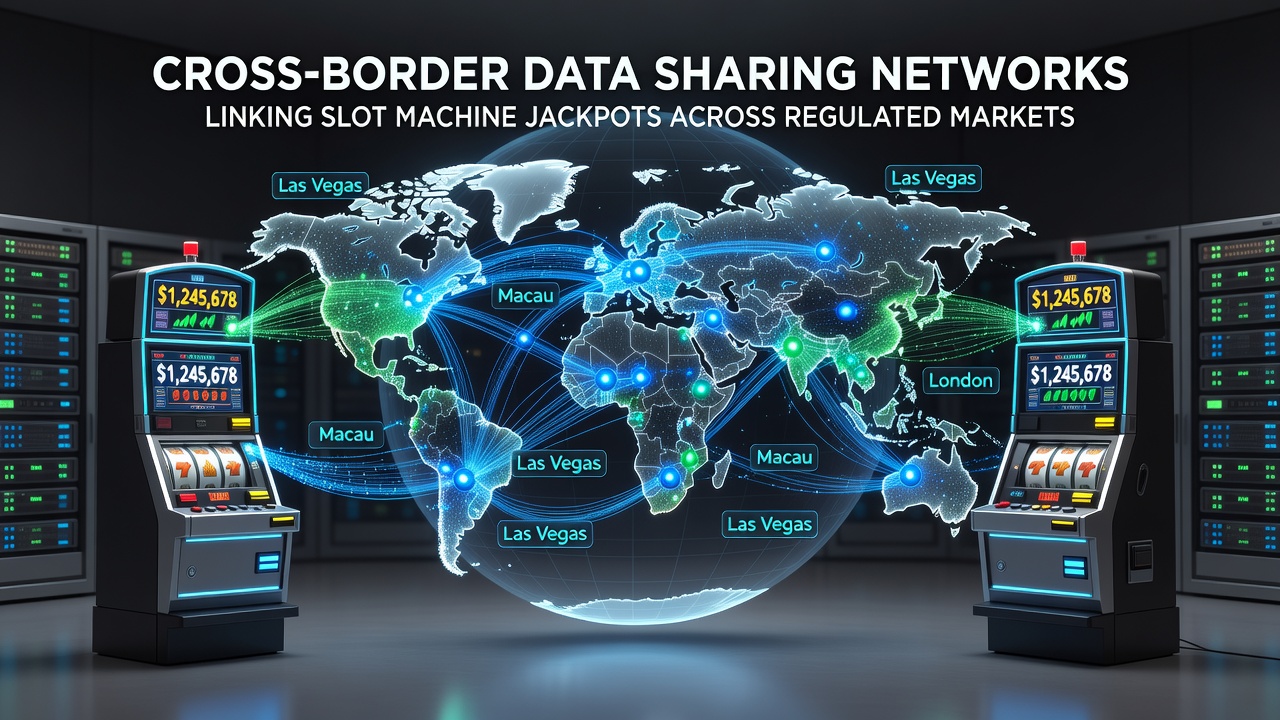
Cross-border data sharing networks connect slot machine jackpots in multiple regulated markets through centralized systems that pool contributions from participating venues. These platforms allow progressive jackpots to grow larger by aggregating wagers from players in different jurisdictions, and operators use secure protocols to transmit real-time data on contributions and payouts while maintaining compliance with local gaming commissions.
Systems from providers such as International Game Technology and Aristocrat Leisure facilitate these linkages, and data flows between casinos in the United States, Canada, Australia, and select European markets. Regulatory frameworks require encryption standards and audit trails so that each jurisdiction retains oversight of its share of the pool, while the overall jackpot amount updates continuously across all connected terminals.
Technical Infrastructure Behind Multi-Jurisdictional Links
Operators transmit wager data through dedicated servers that calculate incremental contributions based on predefined percentages, and these servers synchronize jackpot meters every few seconds to prevent discrepancies. In practice, a player in one market sees the same displayed amount as a counterpart in another region because the network reconciles totals before displaying updates on individual machines. Security measures include tokenization of transaction records along with independent verification by third-party testing laboratories accredited in each participating jurisdiction.
July 2026 saw several operators expand these connections after new interoperability standards took effect in multiple regions, and data from regulatory filings shows increased participation from properties in New Jersey, Ontario, and New South Wales. The expansions rely on application programming interfaces that allow legacy slot systems to integrate with newer cloud-based jackpot controllers without replacing entire machine fleets.
Regulatory Requirements Across Participating Markets
Each jurisdiction imposes specific rules on how cross-border pools operate, and regulators require separate accounting ledgers that isolate contributions by origin so taxes and fees remain correctly allocated. For instance, the Nevada Gaming Control Board mandates monthly reconciliation reports for any linked progressives, whereas the Alcohol and Gaming Commission of Ontario focuses on player fund segregation and dispute resolution procedures. Similar oversight exists in Australia through state-based authorities that coordinate on technical standards for wide-area progressives.
Compliance teams at major operators maintain dedicated compliance officers who monitor data flows in real time, and these teams coordinate with regulators when anomalies appear in contribution rates or payout frequencies. Audits occur at regular intervals, and findings from these reviews often lead to refinements in data transmission protocols that strengthen overall network integrity.

Operational Examples and Recent Developments
One established network links select progressive titles across multiple U.S. states and Canadian provinces, and contribution rates typically range from 1 to 3 percent of each qualifying wager depending on the game configuration. Payouts trigger when random number generators hit predefined thresholds, after which the system resets the meter and distributes remaining funds according to pre-agreed formulas among participating operators. Records maintained by gaming control agencies indicate that such networks have produced jackpots exceeding several million dollars on multiple occasions since their introduction.
Industry reports from the European Gaming and Betting Association highlight similar arrangements in certain European markets where operators pool data under harmonized technical specifications. These arrangements differ from U.S. models because they incorporate additional consumer protection layers such as mandatory cooling-off periods before large jackpot claims can be processed. In Australia, state regulators coordinate through a shared technical framework that allows progressives to span multiple states while each jurisdiction retains authority over its licensed venues.
Data Security and Player Protection Measures
Encryption protocols protect all transmitted jackpot data during transit between venues and central servers, and access controls limit visibility to authorized personnel within each regulatory domain. Independent penetration testing occurs annually, and results from these exercises inform updates to firewall configurations and intrusion detection systems. Player information remains segregated from jackpot contribution data to comply with privacy statutes in each market.
Dispute resolution mechanisms rely on immutable logs that timestamp every contribution and meter update, allowing regulators to reconstruct events when claims arise. These logs also support responsible gaming initiatives by enabling operators to flag unusual play patterns that might indicate problem behavior across linked systems.
Conclusion
Cross-border data sharing networks continue to evolve as technology and regulatory coordination advance, and current implementations demonstrate how regulated markets can maintain separate oversight while participating in shared jackpot pools. Figures from multiple gaming authorities reveal steady growth in the number of connected machines and participating jurisdictions through mid-2026. Further refinements in interoperability standards are expected to support additional linkages without compromising the integrity of local regulatory frameworks.