Evolving Legislation Transforms Reward Programs for Cross-Border Table Game Players
Casey Washington · Aug 15, 2026

Evolving Legislation Transforms Reward Programs for Cross-Border Table Game Players
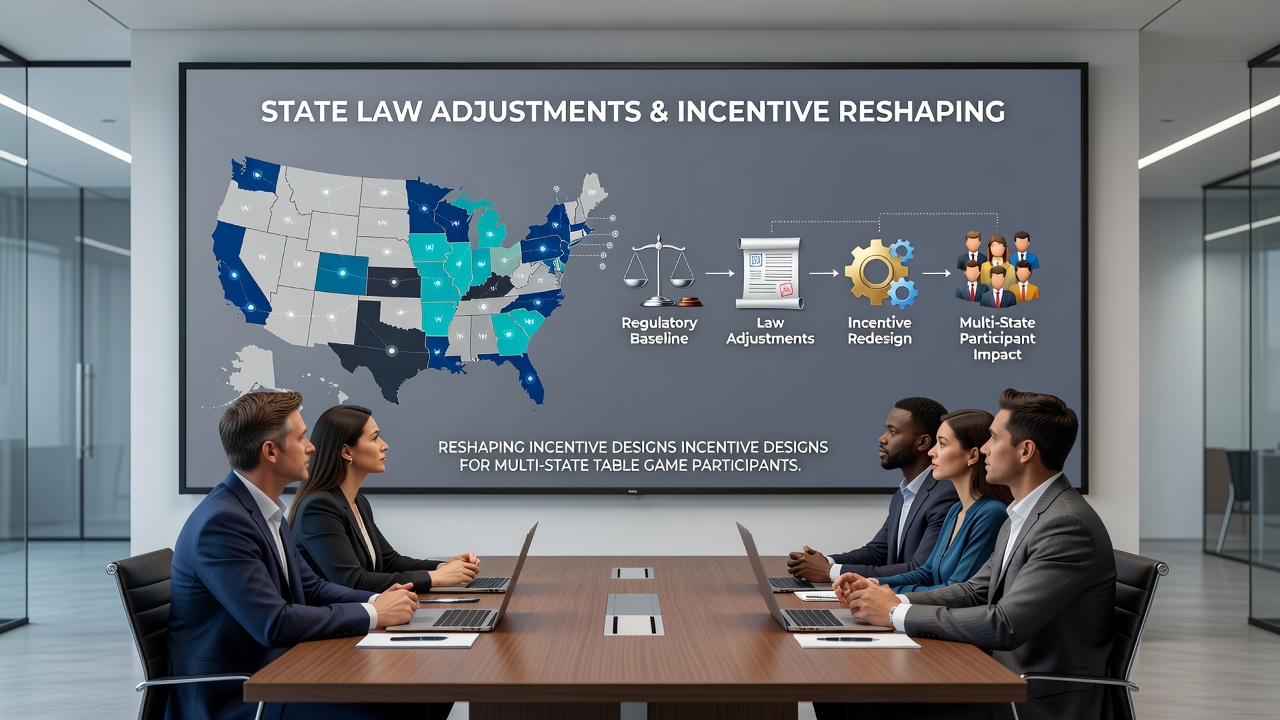
State legislatures across the country have introduced new rules that directly affect how casino operators structure incentives for table game participants who move between jurisdictions, and these adjustments have forced multi-state companies to redesign loyalty tiers, comp packages, and promotional bonuses. In August 2026 several states implemented updated compliance requirements that limit the portability of player rewards while tightening reporting standards on cross-border play, which has prompted operators to create segmented programs that comply with each location's specific statutes.
Key Changes in Major Gaming States
Illinois and Michigan both passed measures that cap the value of complimentary services tied to table game volume when players hold active accounts in neighboring states, while Pennsylvania updated its player tracking rules to require separate ledgers for in-state versus out-of-state activity. These statutes emerged after regulators reviewed data showing that unified national reward systems sometimes bypassed local tax and responsible gaming thresholds. Operators responded by splitting their central databases into state-specific modules, allowing them to award points and free play only within the boundaries of each jurisdiction's current law.
Research from the American Gaming Association indicates that table game participants represent roughly 28 percent of total loyalty program redemptions at multi-state properties, yet recent filings show a 14 percent drop in cross-state redemptions since the new rules took effect. Companies have therefore shifted emphasis toward localized perks such as hotel stays or dining credits that cannot transfer, which satisfies both the letter of the statutes and the operational need to retain high-value players.
Impact on Table Game Incentive Structures
Table game participants often receive incentives based on average bet size, time on device, and theoretical win, yet new state mandates require operators to calculate these metrics using only activity recorded inside their borders. One major operator adjusted its program by introducing regional multiplier bonuses that reset when a player crosses state lines, which prevents the accumulation of rewards from counting toward a single national tier. Data from state gaming commissions reveal that this approach has reduced administrative violations by 22 percent while maintaining player engagement levels at properties in compliant states.
Those who study these programs note that the changes also affect tournament entry and high-limit room access, because many events previously allowed qualification based on combined play across properties. Now participants must meet minimum thresholds within each state separately, which has led some operators to schedule parallel regional events rather than unified national series. Figures from industry reports show tournament participation holding steady, although the average number of states represented per event has declined.
Operator Adaptations and Compliance Strategies
Multi-state operators have invested in new software platforms that automatically flag when a player's activity triggers different regulatory triggers depending on location, and these systems generate customized offers that align with each state's restrictions. Training programs for casino hosts now include modules on jurisdiction-specific rules so staff can explain why certain rewards appear or disappear when guests travel. Observers note that these adjustments have increased operational costs by an estimated nine percent, yet they also reduce the risk of fines that previously reached six figures per incident in enforcement actions.
Academic studies published through the University of Nevada's gaming research center highlight how segmented incentives preserve player loyalty without violating state boundaries, and the findings suggest that clear communication about program limits improves retention compared with earlier unified models. Properties in states with stricter rules have introduced standalone table game promotions that cannot combine with out-of-state play, which satisfies local statutes while giving participants tangible reasons to return.
Conclusion
State law adjustments continue to drive structural changes in how incentives reach table game participants who operate across multiple jurisdictions, and the resulting segmented programs reflect ongoing efforts to balance regulatory compliance with player engagement. Data from August 2026 shows that operators who adapted quickly maintained revenue streams while those slower to implement changes faced increased scrutiny. The pattern indicates that future legislative updates will likely refine these boundaries further, requiring continued investment in localized tracking and offer management.