Biometric Protocols Redefining Security Standards in Multi-State Gaming Networks
Olivia Jung · Jul 13, 2026

Biometric Protocols Redefining Security Standards in Multi-State Gaming Networks
Biometric verification protocols have begun reshaping access controls throughout interstate gaming networks since the early 2020s, with accelerated adoption evident by July 2026 as states expand digital compacts for shared player databases. These systems replace traditional identification methods like driver's licenses or account passwords with physiological markers such as fingerprints, facial geometry, and iris patterns that confirm identity in real time. Data from regulatory filings shows that operators in participating jurisdictions report reduced instances of account sharing and underage access attempts, while compliance teams gain streamlined audit trails across state lines.
Core Technologies Driving the Shift
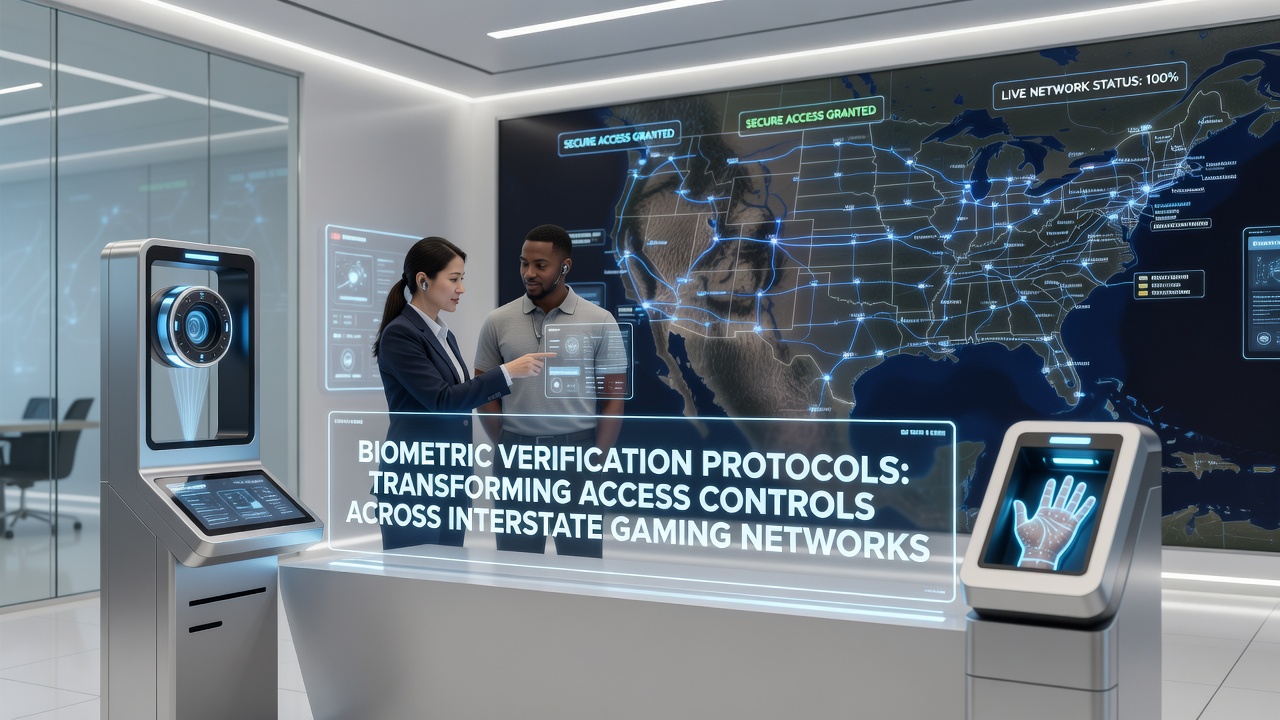
Operators deploy multimodal biometric setups that combine multiple traits to improve accuracy rates above 99 percent in controlled testing environments, according to standards developed by the National Institute of Standards and Technology. Facial recognition cameras positioned at entry kiosks capture live images that match against encrypted templates stored in centralized yet segmented databases, while fingerprint readers handle secondary confirmation during high-traffic periods. Voice biometrics have also entered pilot programs in select sports betting applications, allowing remote verification without requiring physical presence at a terminal. Interstate compacts now specify interoperability requirements so that a player verified in one state receives seamless recognition when accessing platforms licensed in another, provided both jurisdictions maintain compatible data-sharing agreements.
Implementation Across Jurisdictions
By mid-2026 several regional networks had completed integration phases that linked verification servers operated under different state gaming commissions. One documented rollout in the Midwest connected platforms across three states through a shared protocol that flags suspicious activity patterns within seconds of detection. The system cross-references biometric data against watch lists maintained by each participating regulator, triggering automatic access denials when matches occur. Observers note that transaction volumes handled through these networks increased during the first half of 2026 without corresponding rises in reported fraud cases, suggesting the protocols contribute to tighter operational oversight. Canadian provincial regulators have explored similar frameworks for cross-border player pools, though full implementation remains under legislative review as of July 2026.
Regulatory and Technical Requirements
State legislation enacted prior to 2026 mandates that biometric templates undergo irreversible hashing before storage, preventing reconstruction of original images even if a breach occurs. Privacy statutes in multiple jurisdictions require operators to obtain explicit consent for data collection and to provide opt-out mechanisms that route users to alternative verification paths, typically involving in-person document checks. Technical standards emphasize template interoperability so that systems from different vendors can exchange confirmation results without exposing raw biometric information. Research published by academic institutions tracking these deployments indicates that error rates for false positives have declined as algorithms incorporate larger training datasets drawn from diverse demographic groups across participating states.
Operational Impacts on Network Participants
Gaming operators report that biometric checkpoints reduce average verification times from several minutes to under 15 seconds per transaction once initial enrollment completes. This efficiency supports higher throughput at land-based facilities connected to interstate networks while maintaining compliance with responsible gaming limits that span multiple jurisdictions. Security teams utilize real-time dashboards that aggregate access logs from all connected platforms, enabling quicker identification of coordinated attempts to circumvent geographic restrictions. Industry associations have documented case examples where biometric flags prevented repeated access violations that previously required manual intervention across separate state systems.
Privacy Considerations and Data Governance
Although biometric systems enhance security layers, they also concentrate sensitive personal information within interconnected databases that must satisfy varying state privacy laws. Governance frameworks established under current compacts require periodic third-party audits and breach notification timelines that align with the strictest participating jurisdiction. Data minimization principles guide template retention policies, with many networks automatically purging records after a set period of inactivity unless regulatory holds apply. Those monitoring these developments point out that ongoing legislative updates in 2026 continue to refine consent language and data portability rights for players who move between states.
Future Integration Pathways
Plans outlined in regulatory filings project expanded use of behavioral biometrics that analyze typing patterns or navigation habits alongside physiological data for continuous authentication during sessions. Pilot programs scheduled for later in 2026 aim to test wearable device integration that transmits encrypted biometric signals directly to network gateways. Interstate working groups continue to standardize API specifications so that emerging technologies from multiple vendors can plug into existing infrastructures without requiring full system replacements. These steps build upon the foundational changes already visible across networks that now handle verification for millions of player accounts spanning state boundaries.
Conclusion
Biometric verification protocols continue to alter how access controls function within interstate gaming networks by replacing slower manual processes with faster, more precise identification methods. The July 2026 landscape reflects completed integrations in several regions alongside ongoing refinements in privacy safeguards and technical standards. Regulatory bodies from multiple jurisdictions maintain oversight through shared protocols that balance security gains against data protection requirements, while operators adapt operations around the resulting efficiency improvements.