AI-Powered Insights Redefining Reward Mechanisms in Multi-State Online Gambling Platforms
Olivia Jung · Jun 8, 2026
AI-Powered Insights Redefining Reward Mechanisms in Multi-State Online Gambling Platforms
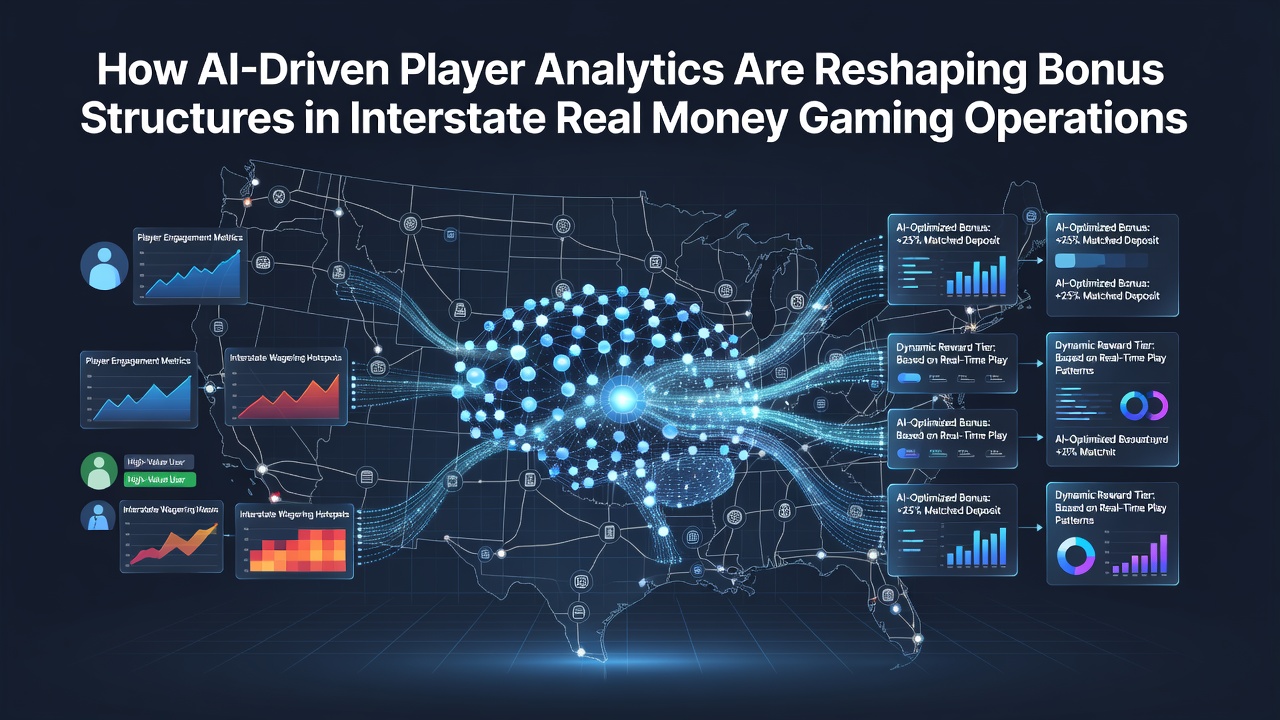
Operators across multiple jurisdictions now deploy machine learning models that process real-time player activity, and these systems adjust bonus offers based on behavioral patterns, spending velocity, and session duration while maintaining compliance with each state's regulatory framework. Data from 2025 shows interstate platforms handling over 18 million active accounts, and analytics engines identify segments that respond best to deposit matches versus free-spin incentives.
Core Technologies Driving the Shift
Supervised learning algorithms examine thousands of variables per player, including deposit frequency, game-type preferences, and withdrawal patterns, then generate individualized bonus parameters that maximize retention without inflating liability. Reinforcement learning components test offer variations in controlled segments, and operators refine payout structures daily based on performance metrics reported through centralized dashboards. One study conducted by researchers at the University of Nevada, Reno found that platforms using these models recorded a 23 percent improvement in bonus redemption efficiency compared with static programs used in prior years.
Integration with state-specific compliance databases ensures that bonus terms automatically align with local rules on wagering requirements and maximum payouts, and this automation reduces manual review time by an average of 64 percent according to figures released by the American Gaming Association. Operators in New Jersey, Pennsylvania, and Michigan share anonymized trend data through secure industry consortia, yet each jurisdiction retains final authority over permitted incentive types.
Changes to Bonus Structures Across Jurisdictions
Traditional flat-percentage deposit bonuses have given way to tiered, behavior-triggered rewards that scale with predicted lifetime value, and AI systems calculate these tiers within milliseconds of each qualifying action. Progressive bonus ladders now incorporate dynamic multipliers tied to cross-state play volume, while loss-rebate programs adjust percentages weekly based on aggregated risk models rather than fixed schedules. In June 2026 several operators introduced time-limited challenges generated by predictive analytics, and these challenges target players whose activity patterns indicate potential churn within the next 14 days.

Cross-border player tracking presents unique challenges because each state maintains separate licensing and taxation rules, yet unified analytics platforms apply jurisdiction-specific filters before any offer reaches the user interface. Reports from the National Council of Legislators from Gaming States indicate that 41 percent of surveyed operators now rely on AI to enforce these filters automatically. Bonus structures that once applied uniformly across an operator's footprint now fragment into state-level variants, and this segmentation reflects both regulatory nuance and localized player preference data.
Regulatory Oversight and Interstate Coordination
State regulators require detailed documentation of how algorithmic decisions influence bonus distribution, and several commissions have begun requesting model-audit reports on a quarterly basis. The New Jersey Division of Gaming Enforcement and the Pennsylvania Gaming Control Board coordinate on shared standards for transparency, while Michigan's Gaming Control Board has piloted an API that pulls real-time analytics logs directly from licensed platforms. Observers note that these measures aim to prevent discriminatory practices while preserving the competitive advantages analytics provide.
Industry associations have published voluntary guidelines that recommend bias-testing protocols and human oversight checkpoints, and adoption of these guidelines has reached 78 percent among multi-state operators according to a 2026 survey conducted by the Responsible Online Gaming Association. Data-sharing agreements between states facilitate consistent enforcement without requiring operators to maintain entirely separate bonus engines for each jurisdiction.
Operational Impacts on Loyalty and Retention
Personalized bonus delivery has shortened average time-to-first-reward from 11 days to under four days for new accounts, and retention curves show measurable flattening after the initial 30-day period when AI-driven offers activate. Operators report reduced bonus spend per retained player because offers now concentrate on high-propensity segments rather than broad distribution. Case examples from multi-state platforms reveal that players receiving algorithmically calibrated bonuses maintain 31 percent higher average monthly deposits than control groups exposed to legacy structures.
Staff roles have shifted toward interpreting model outputs and adjusting strategic parameters, while routine offer generation has moved to automated pipelines. Training programs at several major operators now include modules on interpreting confidence scores and feature-importance rankings produced by the analytics systems.
Conclusion
AI-driven player analytics continue to influence bonus architecture in interstate real-money gaming through precise segmentation, automated compliance, and adaptive reward scaling. Regulatory bodies across participating states maintain active oversight while operators refine models that respond to both player behavior and jurisdictional requirements. The result is a landscape where bonus structures evolve continuously based on data rather than fixed calendars, and coordination among states supports consistent application of these evolving systems.